
KASIMBAHAYANIHAN: Cultivating Augustinian Culture of Charity
LCUP as a university is taking a renewed spirit of response to the call of the Catholic and Apostolic Church for an urgent acceleration of providing support towards an integral well-being, social wellness, sustainable environment and progressive-resilient economy through its integrative instruction that is anchored to research, fair and just information exchange linkages, policy improvement and development and strong community outreach support program.
Our Patron Saint Augustine (who was born on Nov. 13, 354 and died on August 28, 430) beautifully explained in his discourses that the Christian’s progress in love is actually measured in terms of one’s growth in the commitment to the needs of the other, and towards the promotion of common good.
The word ‘community’ – as how St. Augustine understood it, is a group of persons – acting as friends, who live their faith, hope and love as followers of Jesus. “Community” is basically emanating from human nature: that is, every person is a social being; that the life of every human being is inextricably connected to other human lives and elements of the natural environment. This social dimension is the basic foundation of the Christian life with the Church. Every Christian is baptized into the Church - the community of disciples - which is the Body of Christ. Hence, the Church, becomes the necessary foundation and basis of the disciple’s new life in Christ.
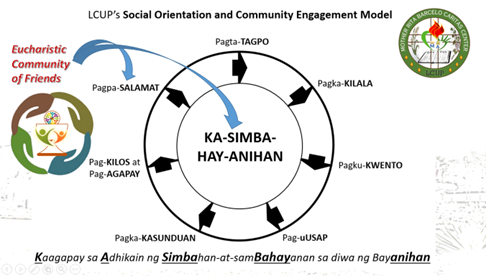
Therefore, the sustainable development of a person cannot be separated from its social context. This requires us to rid ourselves of narrowness and selfishness, and become attuned to a broader social love, joining ourselves to others in such wise that we may have only “one mind, the mind of Christ.” In this spirit of the Augustinian community-of-friends, LCUP is committed to create and provide services to meet the need of the underprivileged and vulnerable members of the society.
Sustainability, Resilience and Care for the Environment: Inclusion in the LCUP Social Orientation and Community Engagement Programs
SDG’s are integrated and indivisible and balance the three dimensions of sustainable development: the economic, social and environmental. The inter-linkages and integrated nature of the SDGs are of crucial importance in ensuring that the purpose of the new agenda is realized.
Sustainability is commonly regarded as development which works not only for the present generation but also for future generation. The term sustainability deals on how societies can shape their modes of existence in a manner that ensures conditions supportive of the continuity of life or present and future generations. It is characterized by development that comprises of the ecological imperative to stay within carrying capacity of the earth’s resources; the economic imperative to provide an adequate and fair standard of living for all; and the social-cultural-political imperative to develop forms of governance and institutions that promote values, practices and relationships that can sustain everyone’s livelihood fairly.
Adopted From UN 2030 Agenda for Sustainable Development Goals
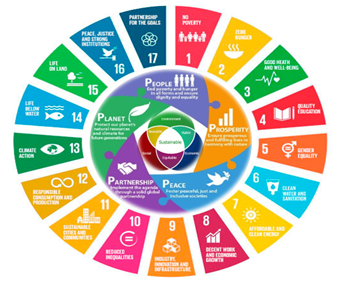
The National Economic and Development Authority kicked off the SDG localization efforts at the subnational level in 2022 as part of the national strategy to implement the Sustainable Development Goals (SDGs) in the country. The PDP is a plan for deep economic and social transformation to reinvigorate job creation and accelerate poverty reduction by steering the economy back on a high-growth path.
The AmBisyon Natin 2040, where all Filipinos are envisioned to enjoy strongly rooted, comfortable, and secure lives. All of our efforts are intended to significantly improve the welfare of Filipinos. As the country faces environmental threats and climate change risks, the government will also ensure that our natural resources are optimally used without compromising healthful ecology for present and future generations. To enable transformation, Philippine institutions will be collaborative, responsive, reliable, and efficient in providing trustworthy, safe, and secure services.
Program-based / Instruction-related Community Engagement Services
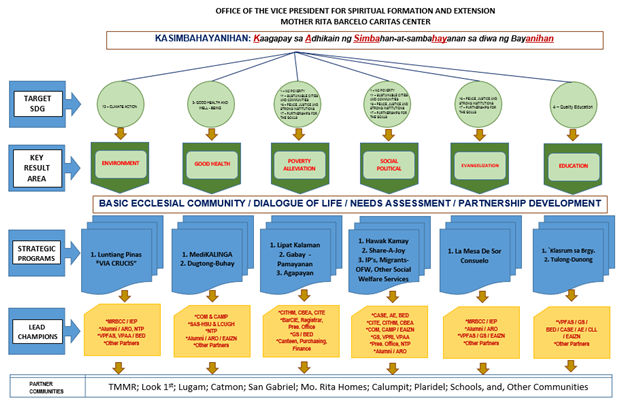
This outreach program is designed to empower individuals’ skills, abilities and knowledge on building an equitable, a sustainable and gender-sensitive community. It is also focused to create opportunities for need-based seminars and /or trainings that would reinforce good relationships and unity within the community and train leaders who are responsible to the needs of their neighbors and the wider community as a whole.
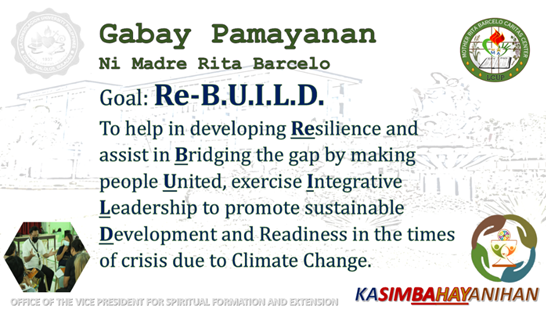
I.Gabay Pamayanan Ni Madre Rita Barcelo
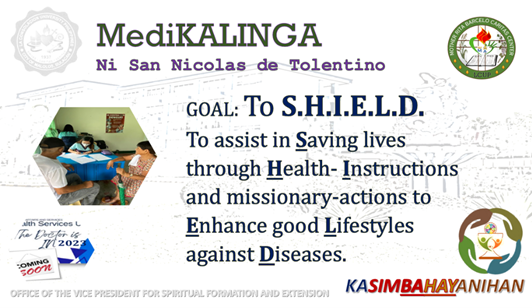
II. MediKALINGA Ni San Nicolas de Tolentino
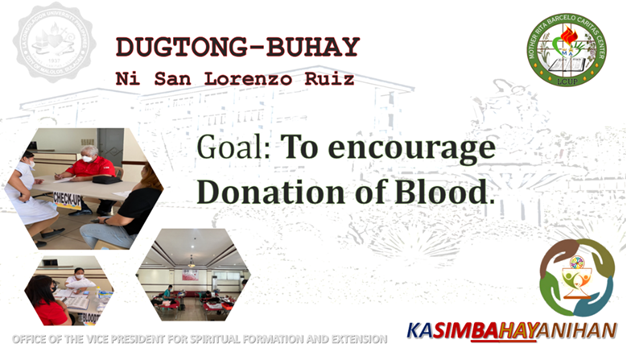
III. Dugtong-Buhay Ni San Lorenzo Ruiz
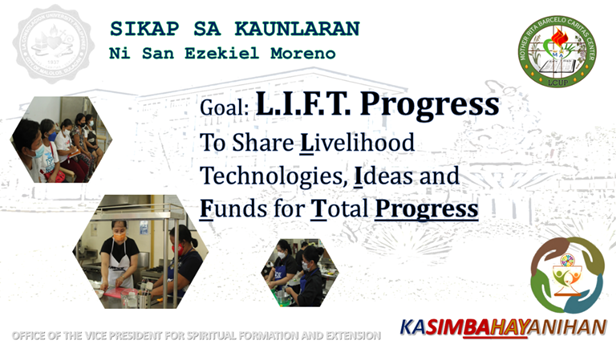
IV. Sikap Sa Kaunlaran Ni San Ezekiel Moreno
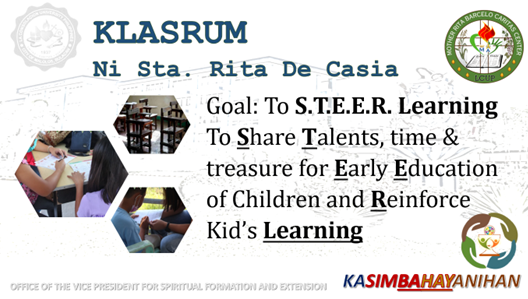
V. Klasrum Sa Brgy. Ni Sta. Rita De Cascia
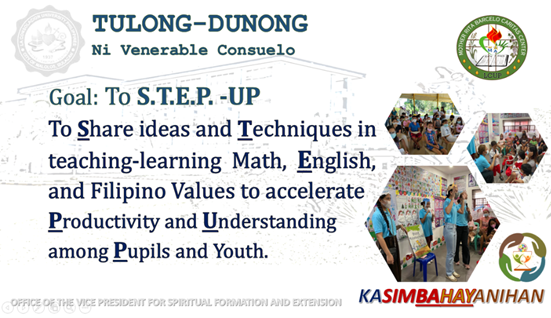
VI. Tulong-Dunong Ni Ven. Consuelo Barcelo
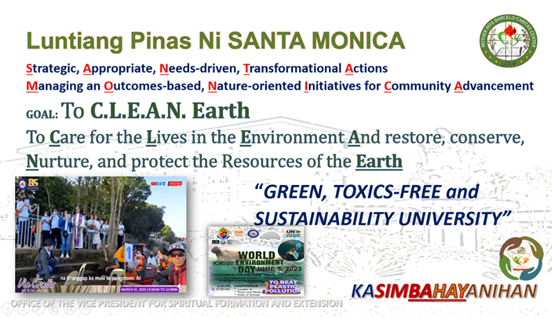
VII. Luntiang Pinas Ni SANTA MONICA
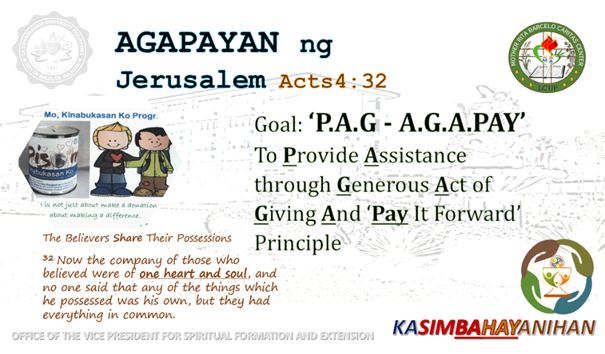
VIII. AGAPAYAN SA JERUSALEM Acts 4:32
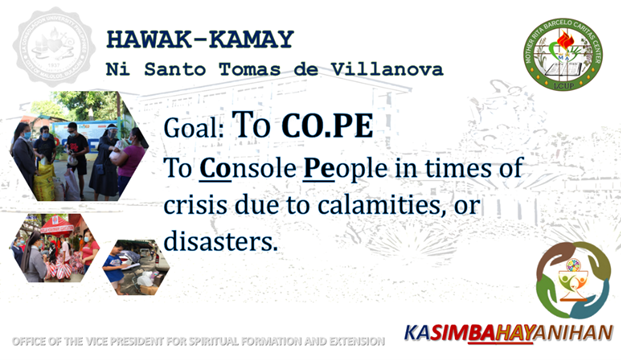
IX. Hawak Kamay Ni Santo Tomas De Villanova
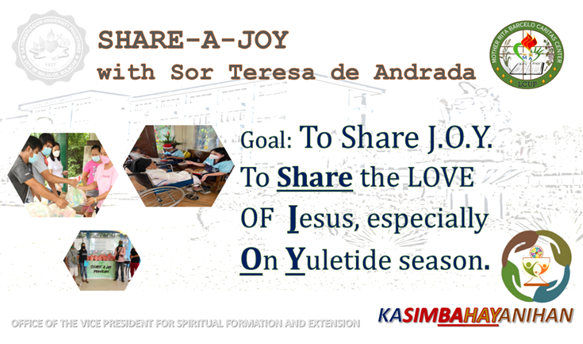
X. Share A Joy With Sor Teresa De Andrada
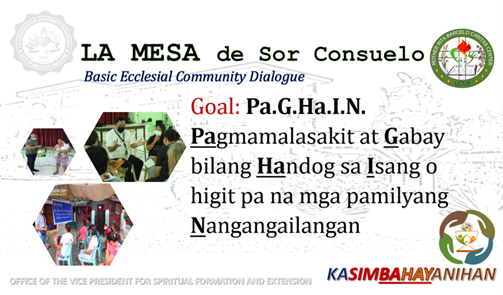
XI. La Mesa De Sor Consuelo
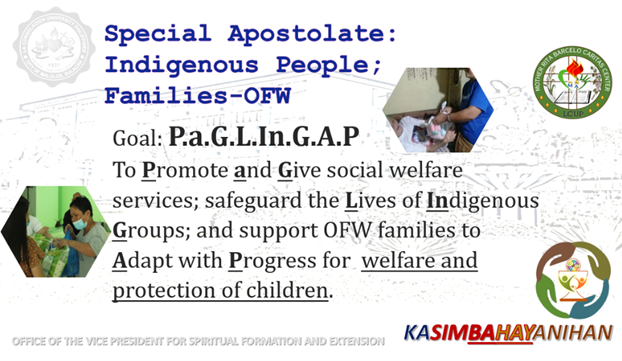
XII. Special Apostolate: Indigenous People and OFW-Families
Consolanian Volunteers
Voluntarism is the core principle of civic-action in a society. It is a phenomenon recognized in the Filipino tradition of Bayahinan by people sharing skills, expertise, knowledge, philosophy, resources and assets among the members of different communities living together. The word voluntary commonly denotes the work done by those volunteers without expectation and claim for any material or financial compensation. In the University, these are the ‘point-persons’ - the volunteers from the different departments, colleges and units who are not paid for.
LCUP is fortunate indeed to have experts, faculty members, students, alumni, parents, foreign nationals who generously share their time, treasures, talents in implementing outreach and services programs. In the context of services to the partner-communities,their voluntary actions means a self-sacrifice without a claim or motives for economic remunerations or rewards.
Governance
The servant-leadership of the University’s President is crucial in animating the members of the University’s community-of-friends to become active agents of social transformation towards sustainable development.
Mother Rita Barcelo Outreach Program is under the pastoral supervision of the Office of the Vice President for Spiritual Formation and Extension. The Assistant to the Vice President is directly supervises the Social Orientation and Community Extension programs. The Director of the MRBCC is tasked to coordinate with the different department Deans, Principal and Unit Directors the implementation of projects and activities. The University Social Worker is supporting the unit by safeguarding the welfare of the students as they visit the partner communities and agencies.


